Current mechanical classes of screws in accordance with ISO 898-1
Meaning of class 8.8:
The first number (8) indicates the ultimate tensile strength of the material, expressed in hundreds of MPa (megapascals).
Here, 8 × 100 = 800 MPa ultimate tensile strength.
The second number (8) indicates the ratio between yield strength and ultimate tensile strength, multiplied by 10.
Here, 8 means that the yield strength is 0.8 times the ultimate tensile strength.
So, yield strength = 0.8 × 800 MPa = 640 MPa.
Mechanical classes of screws (common examples)
Class Tensile strength (MPa) Yield strength (MPa) Typical use
4.6 400 0.6 × 400 = 240 Low-strength screw, light use
5.6 500 0.6 × 500 = 300 General light to medium duty
8.8 800 0.8 × 800 = 640 High strength, mechanical, construction
10.9 1000 0.9 × 1000 = 900 Very high strength, demanding applications
12.9 1200 0.9 × 1200 = 1080 Ultra high strength, heavy industrial use
Additional explanations:
Ultimate tensile strength: maximum load the screw can withstand before breaking.
Yield strength: maximum load before plastic deformation (permanent and irreversible).
The higher the class, the stronger the screw, but it is also often more brittle (can break suddenly without much bending).
Lower classes are used for assemblies that are less subject to high stresses.
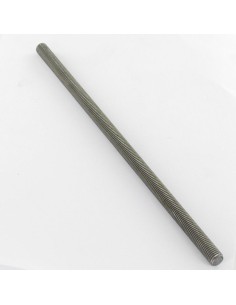
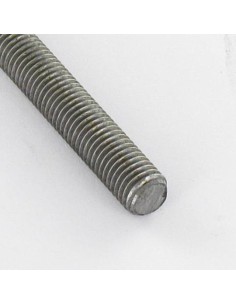
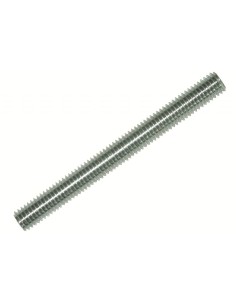
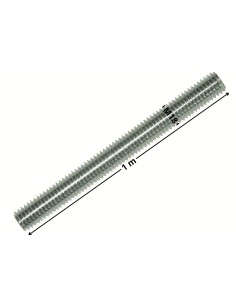
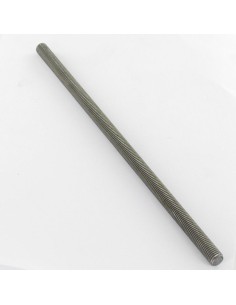
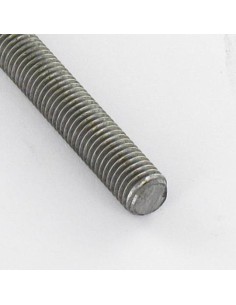
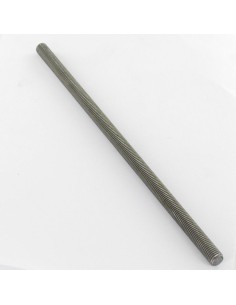
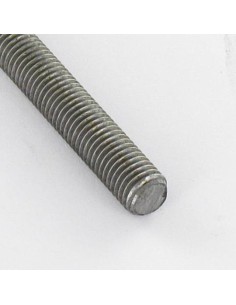
Unmarked screw = class 4.6 or equivalent (generally)
In general, an unmarked screw is a low-strength screw, often made of mild steel or standard steel.
It may correspond to a class 4.6 (tensile strength ~400 MPa, yield strength ~240 MPa) or sometimes even lower.
These screws are suitable for assemblies not subject to high mechanical stress.
Why are they suitable?
Screws in higher classes (8.8, 10.9, 12.9, etc.) must be marked to guarantee their quality and traceability.
The absence of marking often means that the screw is not standardised or is of low quality.
2025-04-13
Wall fixing on hollow brick wall. (with nuts and large washers)