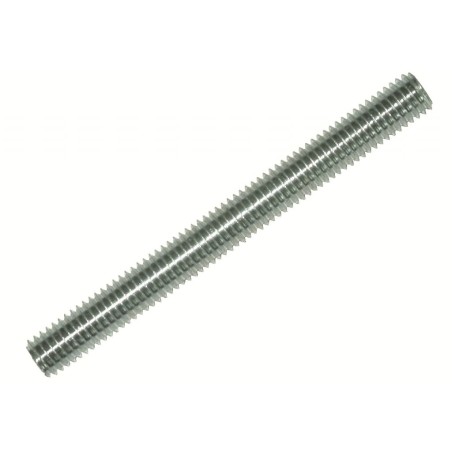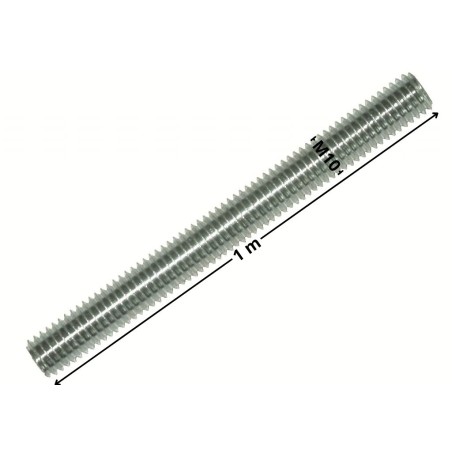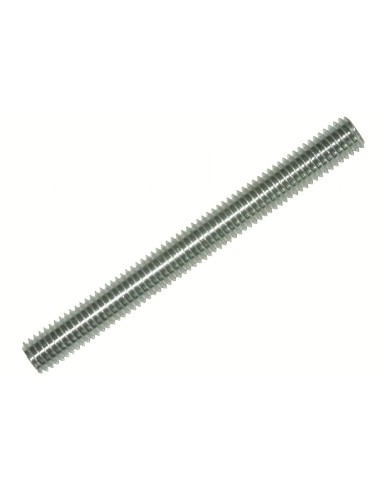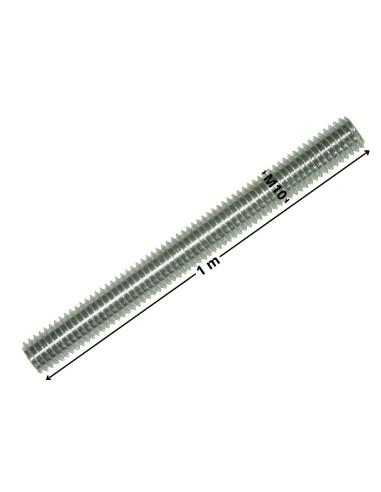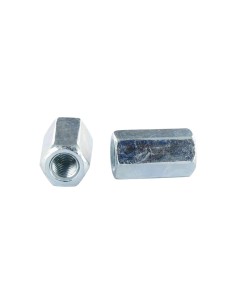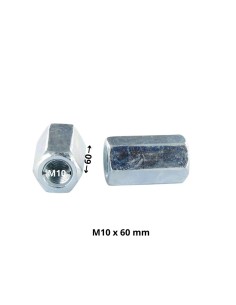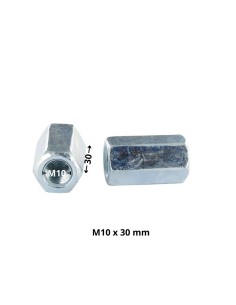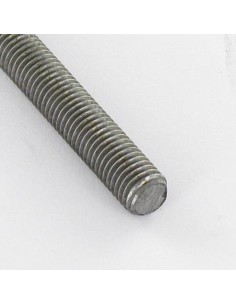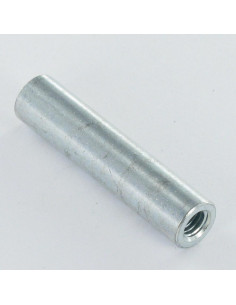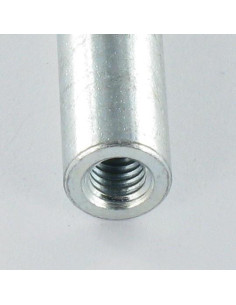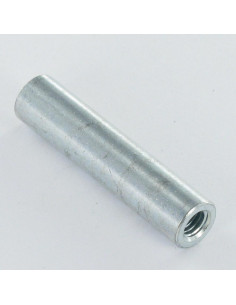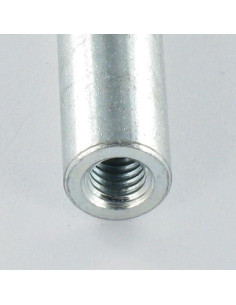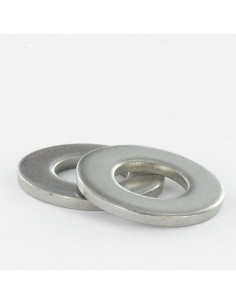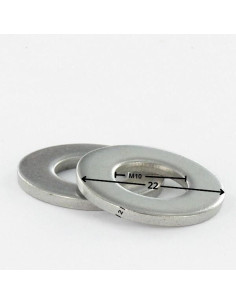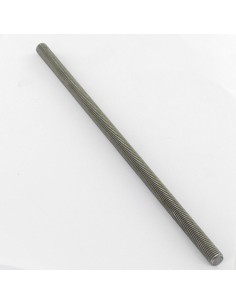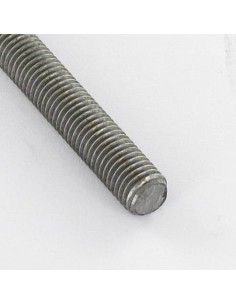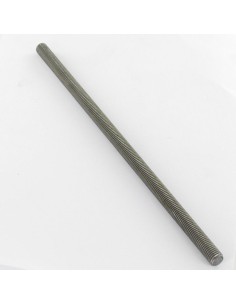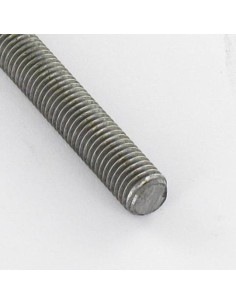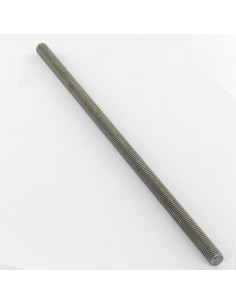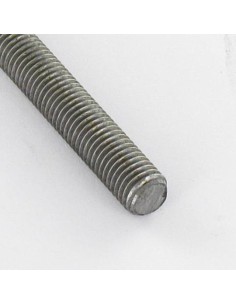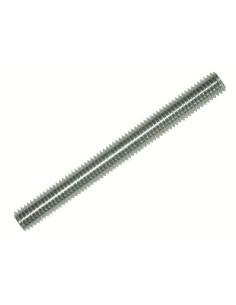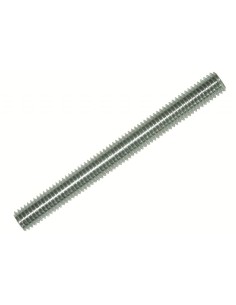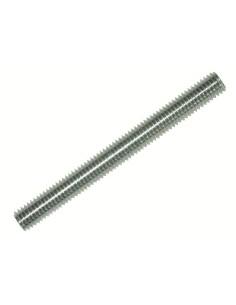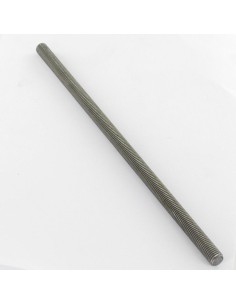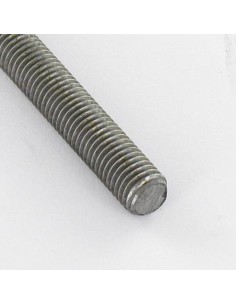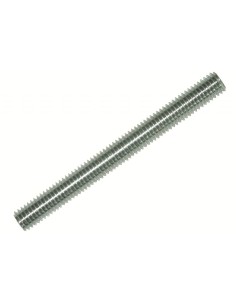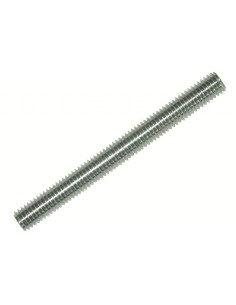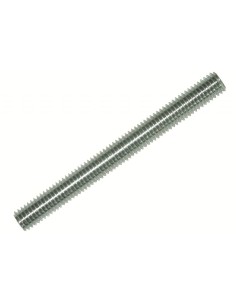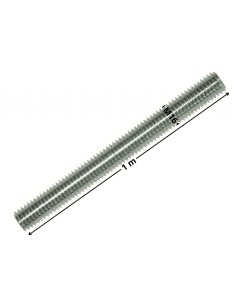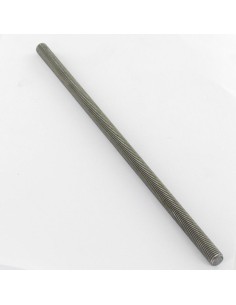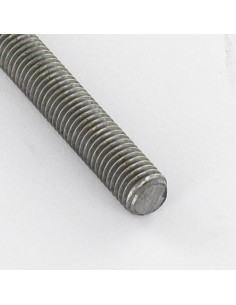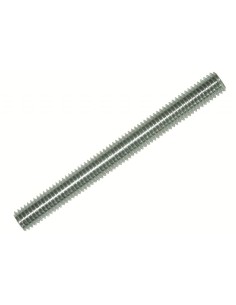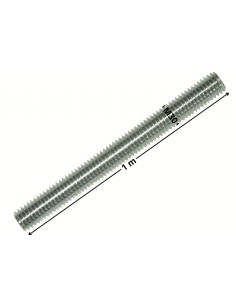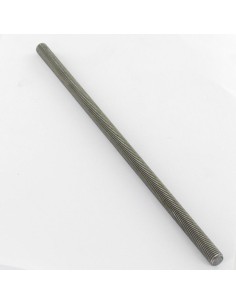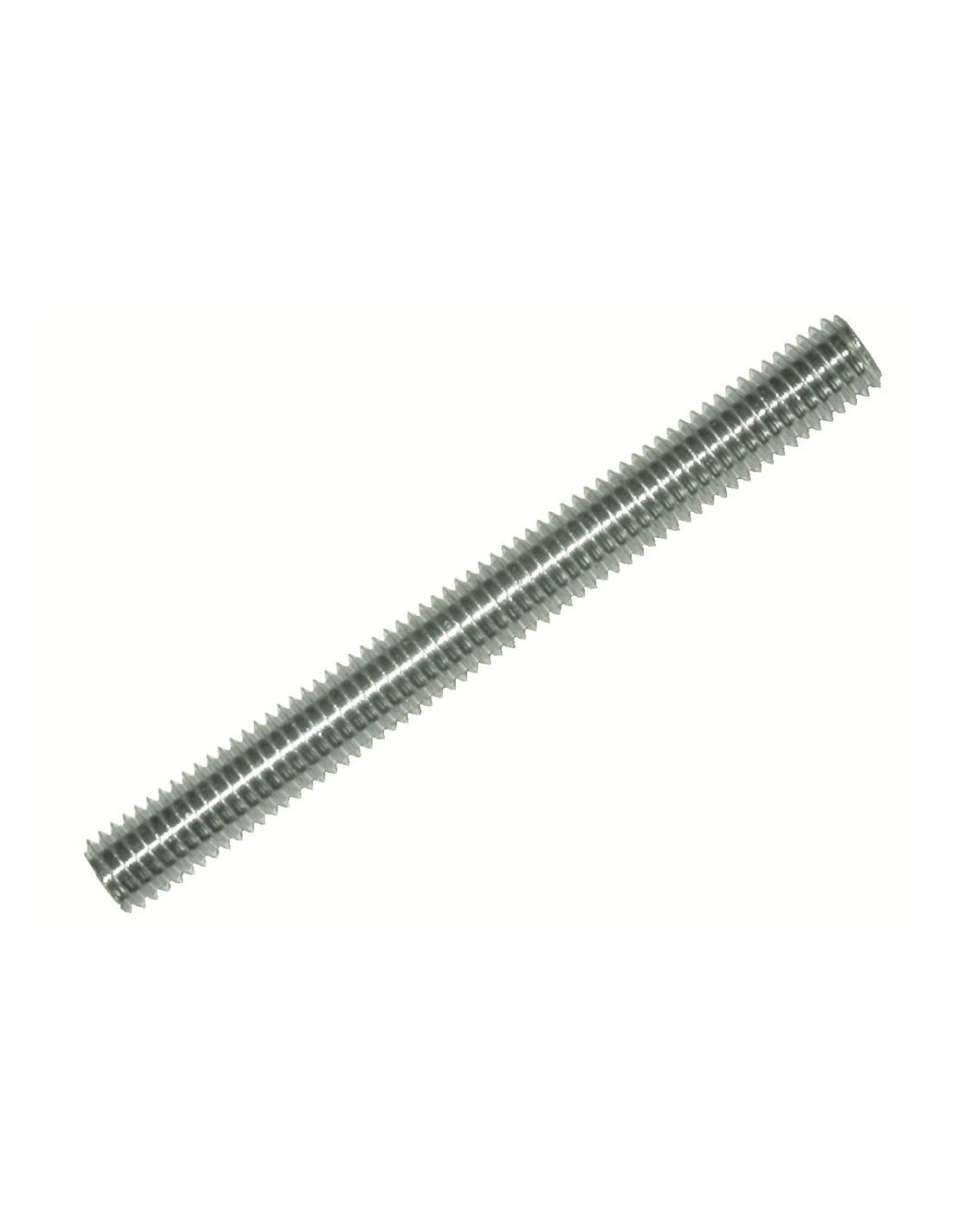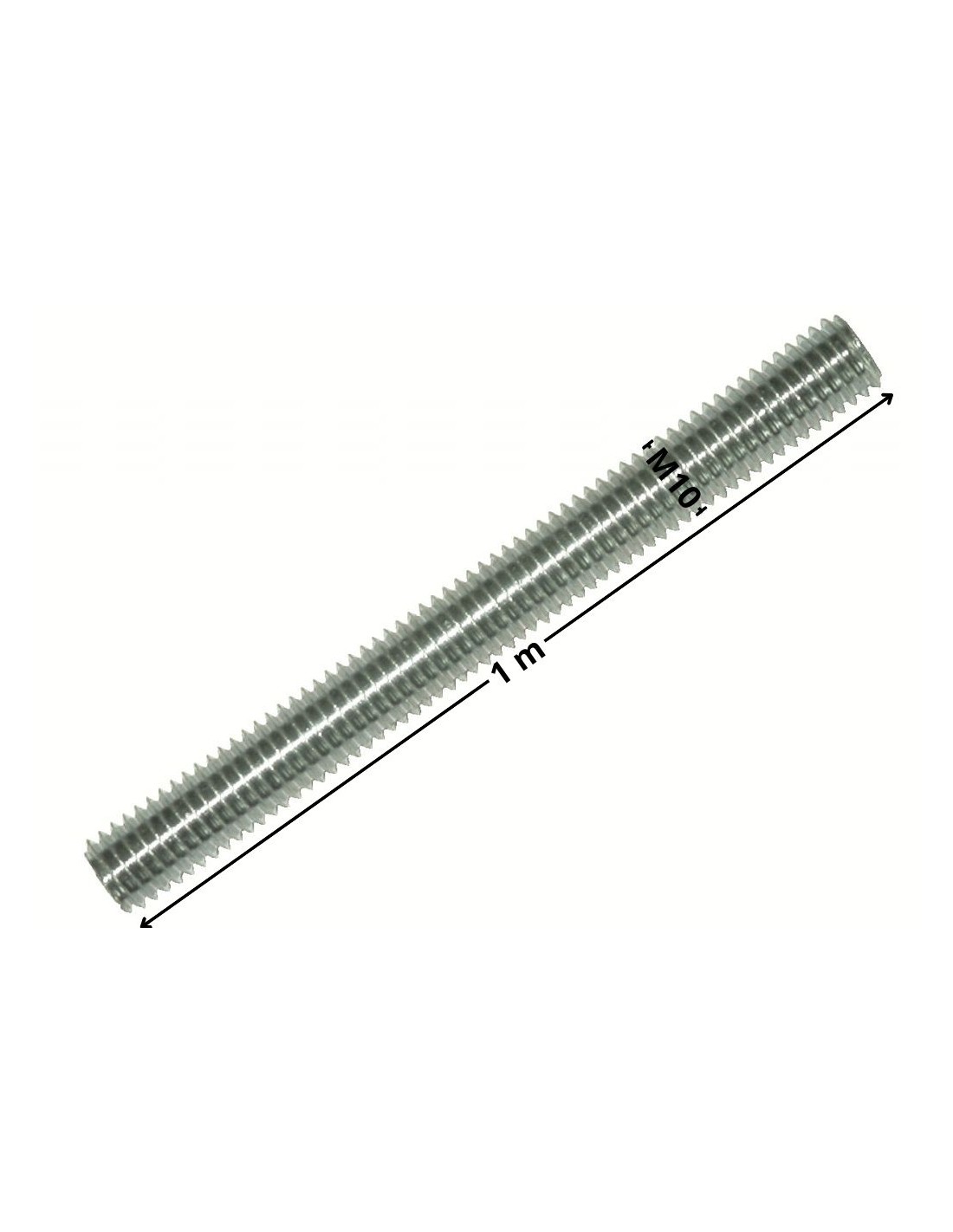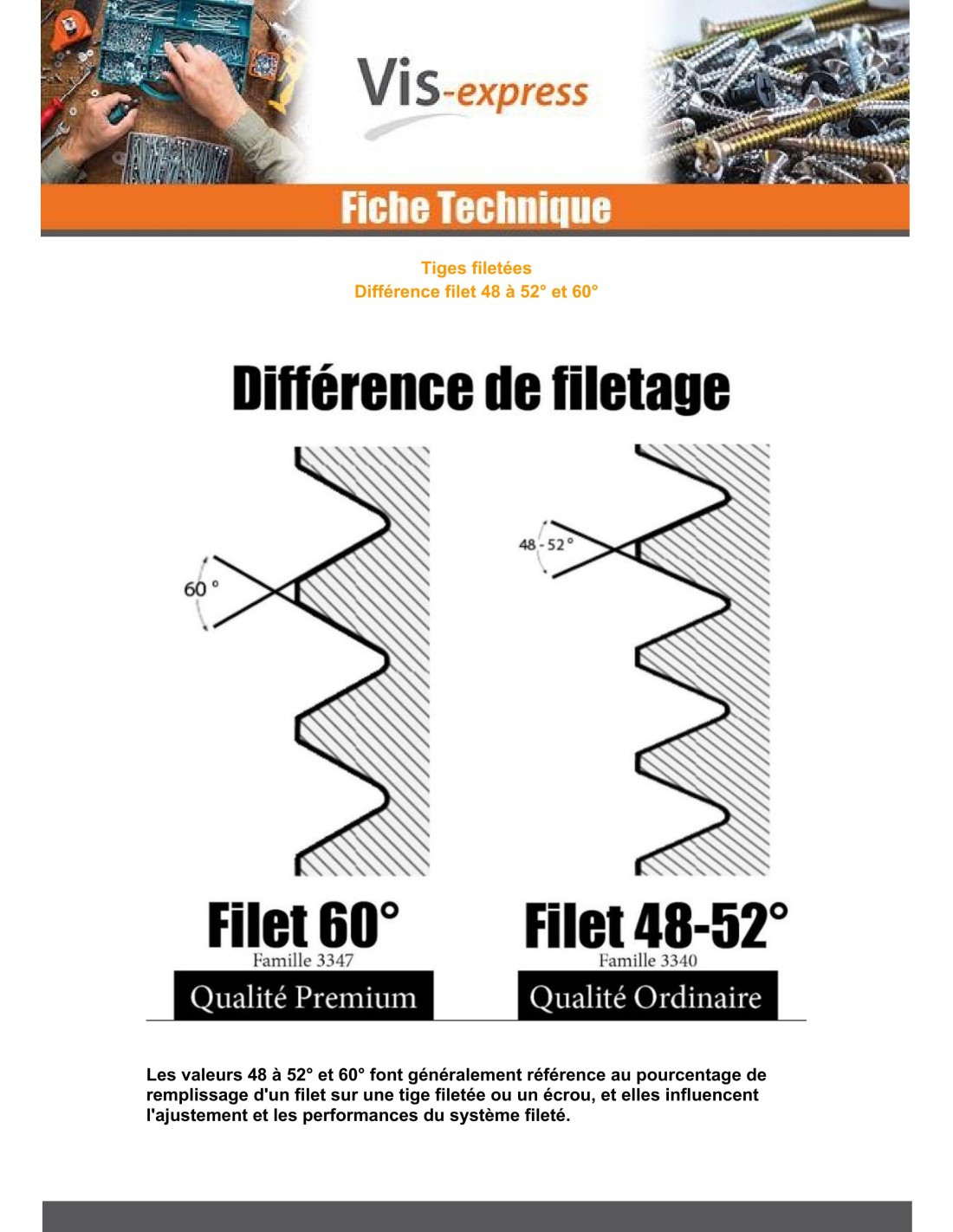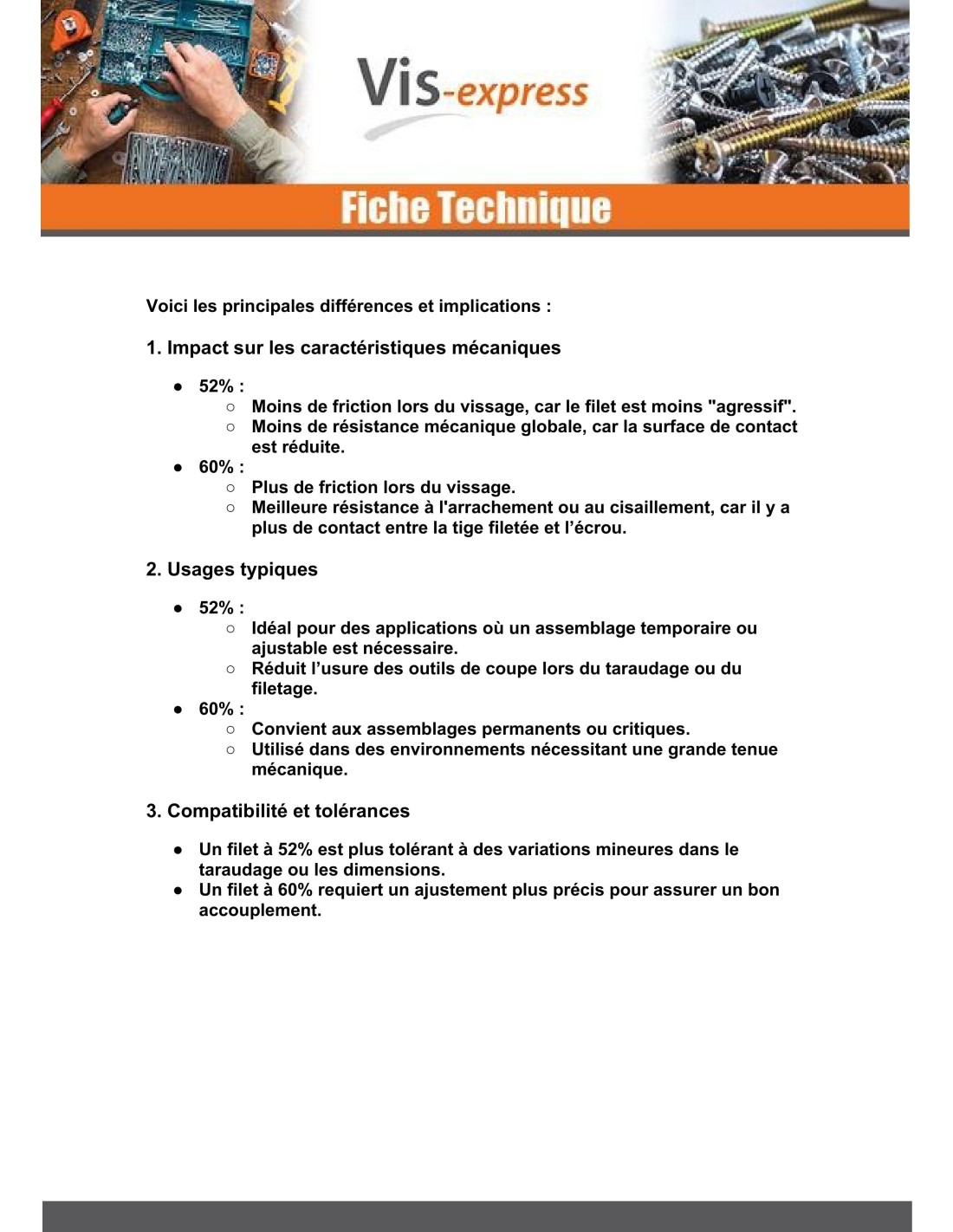
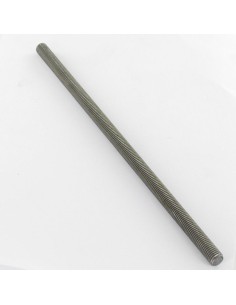
Manchon Hexagonal M10X60 Flatbed 17 Zinc Plated
- 1 unit
- 10 units
- 30 units
- 100 units
- 400 Units
screws
nuts
washers
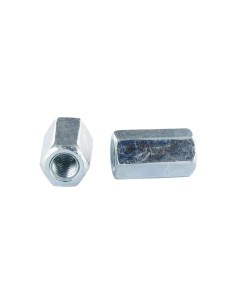
Threaded Rod
Boxes / Tools
Chandlery
| Number of pieces | 1 | 5 | 10 | 25 | 100 |
| Lot price VAT included | €2.15 | €10.80 | €18.70 | €46.75 | €167.30 |
How do I measure the length of a screw?
The length of a countersunk screw is measured with the head. For all other heads, the length is measured under the head.
Current mechanical classes of screws in accordance with ISO 898-1
Meaning of class 8.8:
The first number (8) indicates the ultimate tensile strength of the material, expressed in hundreds of MPa (megapascals).
Here, 8 × 100 = 800 MPa ultimate tensile strength.
The second number (8) indicates the ratio between yield strength and ultimate tensile strength, multiplied by 10.
Here, 8 means that the yield strength is 0.8 times the ultimate tensile strength.
So, yield strength = 0.8 × 800 MPa = 640 MPa.
Mechanical classes of screws (common examples)
Class Tensile strength (MPa) Yield strength (MPa) Typical use
4.6 400 0.6 × 400 = 240 Low-strength screw, light use
5.6 500 0.6 × 500 = 300 General light to medium duty
8.8 800 0.8 × 800 = 640 High strength, mechanical, construction
10.9 1000 0.9 × 1000 = 900 Very high strength, demanding applications
12.9 1200 0.9 × 1200 = 1080 Ultra high strength, heavy industrial use
Additional explanations:
Ultimate tensile strength: maximum load the screw can withstand before breaking.
Yield strength: maximum load before plastic deformation (permanent and irreversible).
The higher the class, the stronger the screw, but it is also often more brittle (can break suddenly without much bending).
Lower classes are used for assemblies that are less subject to high stresses.
Unmarked screw = class 4.6 or equivalent (generally)
In general, an unmarked screw is a low-strength screw, often made of mild steel or standard steel.
It may correspond to a class 4.6 (tensile strength ~400 MPa, yield strength ~240 MPa) or sometimes even lower.
These screws are suitable for assemblies not subject to high mechanical stress.
Why are they suitable?
Screws in higher classes (8.8, 10.9, 12.9, etc.) must be marked to guarantee their quality and traceability.
The absence of marking often means that the screw is not standardised or is of low quality.
All our zinc-plated parts meet this specification (unless otherwise stated).
🛡️ Corrosion protection: low
Thin 3 to 5 µm zinc coating, suitable for environments with low exposure.
🧂 Salt spray resistance: 24 to 96 h
Indicative resistance before the appearance of rust, depending on the coating finish.
🏠 Recommended environment
Indoor applications or environments with very low exposure to moisture.
🔩 Threads preserved
The low coating thickness limits dimensional variations and helps maintain thread accuracy.
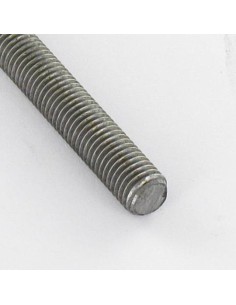
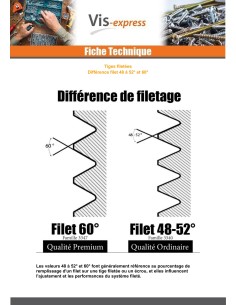
| Diameter | 3 | 4 | 5 | 6 | 7 | 8 | 10 | 12 | 14 | 16 | 18 | 20 | 22 | 24 | 27 | 30 | 33 | 36 | 48 | 52 | 56 |
| Pitch | 50 | 70 | 80 | 100 | 100 | 125 | 150 | 175 | 200 | 200 | 250 | 250 | 250 | 300 | 300 | 350 | 350 | 400 | 500 | 500 | 550 |
Used to suspend exhaust silencers 120kg exhaust
Construction machine CNC Insertion dans l'âme de profilés alu MOTEDIS 2040 pour rigidifier dans l'axe longitudinales
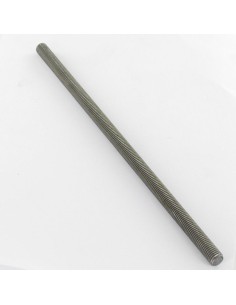
For Pergola M10 Threaded Rod, 1 m Length, Class 4.8, Zinc-Plated Steel
To make tables No specific brand or size, it's a project under study
To hold the boards that I use as formwork for my vegetable boxes to prevent the boards from twisting
Use in my greenhouse Maintaining the spacing between 2 corners
Used to attach a feed tub to an existing extruder. Used to attach a feed tub to an existing extruder.
3-step wedges for campervan Dimensions: 60 cm x 18.9 cm Steps: 3.8 cm, 7.6 cm, 11.4 cm
Construction and manufacturing of crates for storage Restoration of outdoor chairs in wood and iron Crate 40x25x35, 20x25x20, Board for chairs 60x60 pallets
Post base fixing Castorama post base in zinc-plated steel
Construction of a joist joint with threaded rod axle
fixing wooden walls together
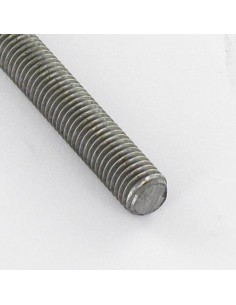
Making a piece of furniture
I use this threaded rod to anchor a core drill in a concrete slab. D cut 4 sections of threaded rod e of 12 to 15 cm with the grinder, drill the slab, and fix the threaded rods to the chemical seal, then bolt the foot of the core drill. The whole is more economical than the kits dedicated to this use.
You might also like
Save products on your wishlist to buy them later or share with your friends.
2026-07-19
Fixing the edge of a pétanque court 16 chain crossbars